Malaria and Compassion’s Bite Back Program

Image

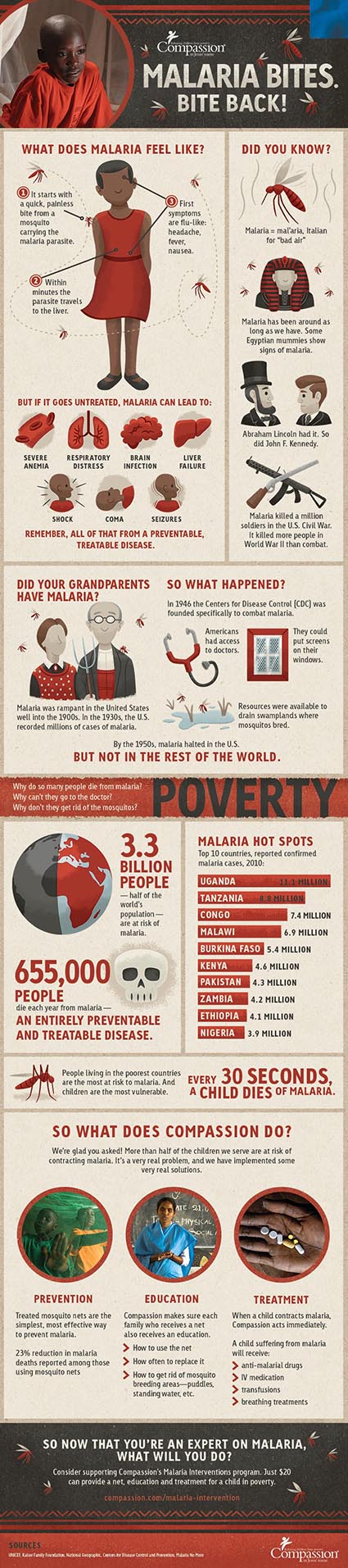
Today is World Malaria Day – a day meant to bring attention to this deadly disease.

There have been many accomplishments in fighting malaria over the last decade. In that time, malaria deaths have been cut by one-third in Africa and one-half outside of Africa, according to the web site, http://www.worldmalariaday.org. However, 3.3 billion people are still at risk of being affected by this mosquito-born disease, and most often, those affected are people living in poverty.

Symptoms include fever, chills and flu-like illness, which, left untreated, can result in death. According to the Centers for Disease Control and Prevention, 660,000 people died in 2010 alone.

Fortunately, malaria is preventable and treatable. A donation of $20 to Compassion International’s “Bite Back” campaign provides two mosquito bed nets to those in need. You can donate here: http://www.compassion.com/malaria-intervention.htm. Compassion provides nets and education to at-risk families as well as treatment to those already suffering from malaria.

Please watch the following video and consider making a donation today: http://www.youtube.com/watch?v=LftEavUydNk&feature=player_embedded.

Compassion’s Impact

A recent study of Compassion’s child sponsorship program carried out by independent researchers shows a significant impact on sponsored children’s education, employment and leadership .

The peer-reviewed research will be published in the April issue of the Journal of Political Economy.

Some of the encouraging findings show that sponsored children stayed in school longer and were more likely to finish secondary education than their non-sponsored peers. They were 50-80 percent more likely to complete a university education.

Check out the link below to see more of the study’s findings.

http://www.compassion.com/poverty-facts.htm?referer=128018

Kisses from Katie

Image

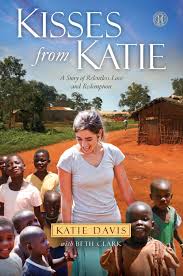
“Kisses from Katie: A Story of Relentless Love and Redemption” by Katie J. Davis

It’s not often that you run across someone who has determinedly decided to forgo the “American Dream,” but that’s just what a young woman from Nashville did.

At 18 years old, Katie Davis traveled on a short mission trip to Uganda over Christmas break during her senior year of high school. It was a trip that changed the course of her life, causing her to make decisions that surprised her family, boyfriend and friends.

Upon returning home after the trip, Davis continued to feel the Lord calling her back to Uganda. She decided to answer that call by giving up college and returning to the country that had captured her heart.

It was a shocking decision made by a young woman who seemed to have everything going for her. Her book, “Kisses from Katie: A Story of Relentless Love and Redemption” tells that story.

Davis wrote, “I hadn’t realized what a transformation had taken place while I had been in Uganda, the spiritual richness I had experienced in material poverty and the spiritual poverty I felt now in a land of material wealth.”

Hers is an amazing story of faith and determination, and I can’t help but be in awe of how the years have played out for Davis. Facing extreme poverty, hopelessness, disease and sometimes death of those she cared for, it is incomprehensible that this young woman was able to hold up under such pressure.

But hold up she did, and years later, Davis remains in Uganda, making a difference every day.

Davis established a ministry called Amazima in 2008, which sends 600 orphaned and vulnerable children to school through an education sponsorship program. It also feeds lunch to more than 1,200 children in the slum community of Masese every week day. Amazima hosts Bible studies and worship services and implements vocational training programs in the area.

And as if all this weren’t a huge accomplishment, by the end of her book, Davis is in the process of adopting fourteen girls, who live with her in her home in Uganda. She cares for these children daily, as their mother, all the while, caring for members of her community as well.

Davis’ inspiring story is well worth reading, and for more stories after the book ends, visit her blog at http://www.kissesfromkatie.blogspot.com.

“I have learned that I will not change the world, Jesus will do that,” Davis wrote. “I can, however, change the world for one person. I can change the world for fourteen little girls and for four hundred schoolchildren and for a sick and dying grandmother and for a malnourished, neglected, abused five-year-old. And if one person sees the love of Christ in me, it is worth every minute. In fact, it is worth spending my life for.”

To donate to Davis’ ministry, Amazima, visit http://www.amazima.org.

Help! What do I Write About?

DSC_2491

Sometimes writer’s block sets in, so here’s a quick list of topics to use when writing to your sponsored child:

SELF

where you live

history of your town/city

your education

your occupation

your dreams for the future

describe your pets

describe your garden

describe an activity you enjoy

describe weather where you live

anything unique or interesting about you

discuss favorites:

color, number, holiday, movie, song, book, book character, author, food, recipe, drink, sport, sports team/player, season

FAMILY

immediate family members’ names/ages

spouse’s occupation

children’s occupations

children’s level in school

what subjects children are studying

number of your siblings

your siblings’ ages

funny stories from childhood with siblings

special cousins & stories from childhood with them

FAITH

when/how you became a Christian

describe your church

describe your worship service

favorite Bible verse

favorite book of the Bible

favorite woman/man in the Bible and why

favorite Bible story and why

share recent message at church

share current Bible study

favorite thing about church

describe your pastor

something you admire about your pastor

describe someone special at your church

HOLIDAYS

your favorite holidays

how you celebrate them

favorite music you associate with certain holidays

who you visit on holidays

traditions

QUESTIONS TO ASK

If you could have any job, what would it be and why?

What is your typical day like?

What do you see when you look out your window at home?

What do you see when you look out your window at school?

What is your dream job?

What would you do if you could fly?

Describe the best day of your life.

Who is the person from the Bible you’d most like to meet and why?

Who is the person from history you’d most like to meet and why?

What is your favorite kind of weather and why?

What is your hobby?

Have you ever had to make a difficult decision and what was it?

Did you ever win or lose a contest?

Did your parents ever make you wear something you hated?

Have you ever caught fireflies, crickets, frogs, snakes, etc.?

Did you ever move to a different town/city?

Describe something you learned from a friend.

Describe something you learned from a family member.

Name something you like about yourself and why.

Describe your best personality trait.

Write about your favorite sport and why you like it.

Compassion Sunday – Change the Story

Compassion Sunday is set for April 21 this year, and on this day, many volunteers will present Compassion and its mission to their churches. There are 2,000 churches participating nationwide, and hopefully many children will be sponsored!

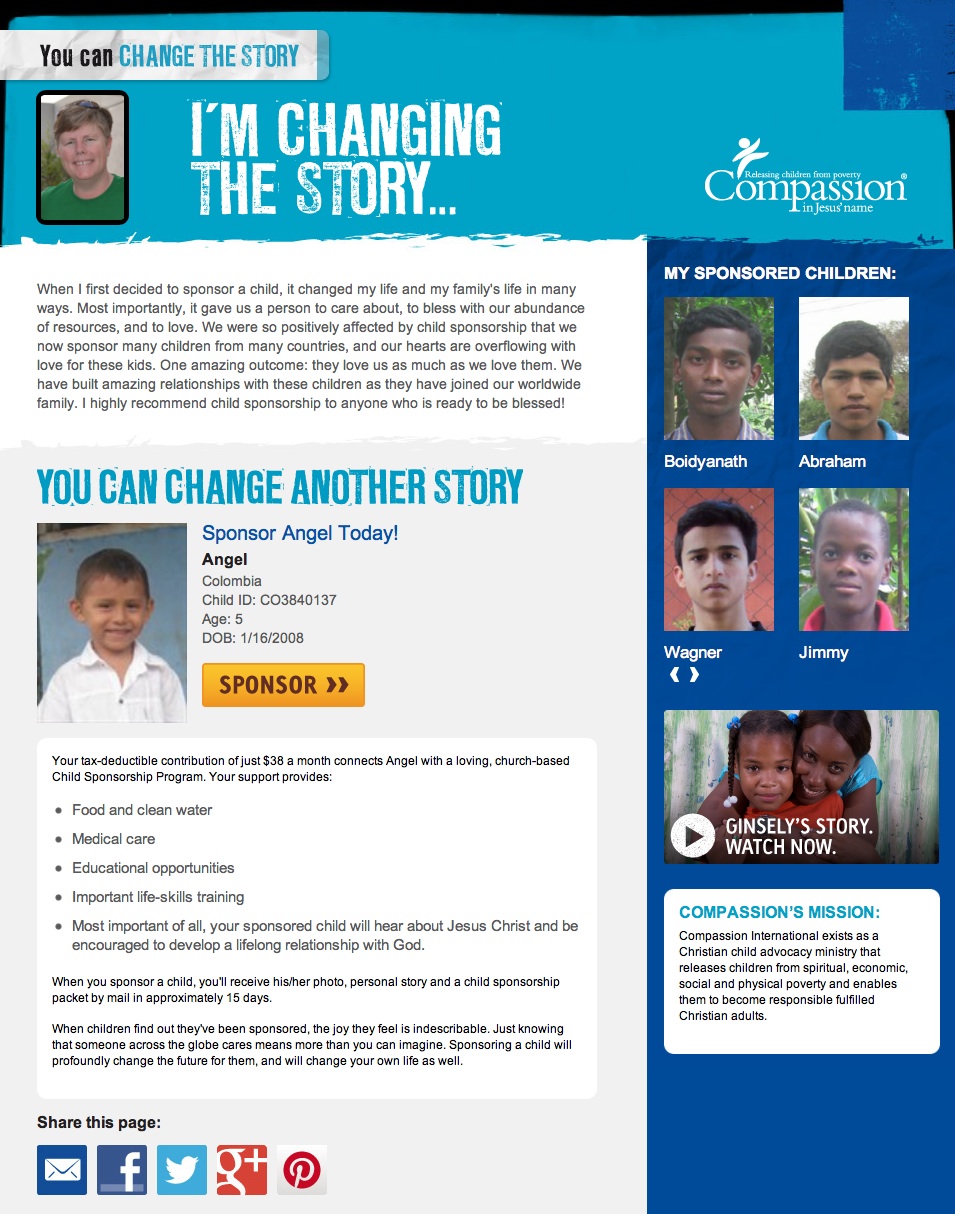
Here is my Compassion Sunday page: http://my.compassionsunday.com/givinggratefully.

On this page, you will see sweet Angel, 5, from Colombia, who currently needs a sponsor. You can sponsor him from here!

You also will see some photos of my own precious sponsored children. 

If you’ve never sponsored a child, please consider doing so. If you’re already a sponsor, maybe Angel is your next child!

Kids These Days

Image

Logan with the first letter from his sponsored child, Osmar.

Kids these days – have you ever noticed that they always seem to have their noses stuck into some kind of electronic gadget? Whether it’s a video game, a phone or sometimes both, it seems there is always something demanding their undivided attention.

I’m sure it’s always been the same. As my children grow older, it’s hard not to compare them to myself and my friends at their age, just as I’m sure my parents and grandparents did.

With so many things distracting today’s kids, it’s easy to worry about the future. It’s hard not to wonder who will see society’s problems and find some solutions. Who will look after tomorrow’s poor? Who will answer the call to look after “the least of these” in a generation that seems so self-absorbed?

It turns out, one answer to those questions is living in my house. Last month, my 11-year-old son Logan sponsored a child.

He pleaded with me and my husband for days, writing out lists of possible sources of income (chores, birthday and Christmas money), and explaining to us just how dedicated he will be. He promised to write to his child monthly. He even agreed to take on a few extra chores. So we finally agreed that he could do it.

Logan headed straight to the computer to search for his child. He pored over the thousands of children available for sponsorship on Compassion’s web site, then narrowed his search to Central and South America.

He was drawn to the boys, and soon had written five names on a list. The boys ranged in age from 4 to 12 years old, and a couple of them really were tugging at his heart because of their family circumstances. I told him it would be a good idea to go to bed, pray about his list, and make his final decision the next day.

After he finished school for the day, he looked back at each of the five boys he had been interested in sponsoring. One of the children was gone from the site, so he had been sponsored already.

Out of the four remaining boys, Logan chose an 11-year-old from Guatemala named Osmar. He decided it would be most fun to have someone close to his age to write to and hopefully to visit at some point in the future.

I can’t explain how it touched my heart to see Logan’s joy at sponsoring Osmar. He spent several days reading everything he could find about sponsorship on Compassion’s web site. He wrote a letter to Osmar right away, and has sent two more since then.

And today, after five weeks of checking the mailbox daily, Logan received his first letter from Osmar. Now their friendship has begun, and I look forward to seeing where it leads.

I’m sure the differences in their lives are many, but like boys everywhere, these two have started off sharing their likes and dislikes with each other. Osmar wrote that his favorite drink is Coca-Cola. Logan’s favorite is Dr. Pepper. Osmar’s favorite color is red, while Logan’s is blue.

He writes that he hopes Logan likes his handwriting and promises to try to improve it, already seeking his new friend’s approval. Likewise, Logan painstakingly chooses photos and soccer cards to send to Osmar, hoping to pick things his new friend will enjoy.

And with friendship and love growing across borders, it makes it hard to worry about kids these days.

Blessed by Giving

Image

Cristian, 4, of Romania, with gifts purchased using family gift money.

I’ve sponsored children in poverty for 2 1/2 years, and the thrill of receiving a sponsored child’s letter in the mail has not worn off.

Today, I was excited to find a letter in the mailbox from a child I sponsor through World Vision. I was even more excited to open the letter and discover two photos inside.

The photos showed Cristian, 4, of Romania, with items his family was able to purchase using a monetary gift I sent them in December. It warms my heart to see so many items stacked on the table in front of him. The purchase of food shows the family’s need, and I’m so thankful to have been able to help them out.

Because Cristian is too young to write, one of his older sisters writes letters for him. I’ve learned several things about his family in just 6 months of sponsoring him.

He lives in a two-bedroom home in rural Romania with his parents and six siblings. They suffer through very cold winters, with lots of snow, often piled as high as their house. One of Cristian’s young sisters has cancer, so she spends some time at a hospital. And, like children everywhere, his siblings like to invent games and make paper airplanes.

Today’s letter thanked me for the gift and listed items purchased: “canned goods, chicken legs, rice, sugar, beans, flour, peas, pasta, bread, biscuits, diary products, tomato sauce, diapers, washing powder, jam, cheese, apples, bananas, oranges and many other products.”

And these words, which humble me in ways I can’t describe: “Thank you so much for the wonderful gift you sent me when I needed it the most. We were going through a difficult time, and your help saved my brothers and me.”

I’m thanking God today that my own children’s needs are met every day, and that we can share God’s blessings with another family.

The Queen of Katwe

Image

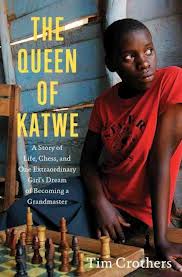
“The Queen of Katwe,” by Tim Crothers, is the story of an incredible young girl, who against many odds, surprises many by learning and mastering the game of chess.

Phiona and her peers are growing up in the Ugandan slums of Katwe, an area in the country’s capital city, Kampala, where children don’t know their birth dates or even how to spell their own names. It is a place where children struggle to eat each day, where parents die of AIDS regularly, and where families move from shack to shack, living wherever they can afford.

In this life of day-to-day survival, one young man, Robert Katende, working for Sports Outreach Institute, begins a ministry first focused on soccer, then on chess, and the game captivates the children of the area. Katende relates well to these children, as he, too, grew up in the severe poverty of Katwe. In fact, Katende’s story of survival and pulling himself out of the slum is quite as impressive as Phiona’s.

Considering these circumstances, it’s no wonder that a bowl of porridge is what first attracted the children to Katende’s group.

Phiona is a bit of a late-comer to the group, but after following her brother there one day, she becomes a fixture. She learns the game first from a much younger girl, but soon surpasses many in playing ability. She later practices using bottle caps and a chessboard drawn on scraps of cardboard.

As Phiona travels out of the country and experiences other cultures, her eyes are opened to the fact that there is more out there, more to reach for, than Katwe. On these trips to chess tournaments, she sleeps in hotel rooms on real beds and eats from buffets with endless amounts of foods offered. But after each tournament, she must return to the reality of her home.

It won’t be an easy road for her to reach her goal of becoming a Grandmaster, as many young women much more privileged than Phiona can attest. But where she had nothing to strive for before, she now has a goal and, more importantly, hope.

Looking for Sponsors

I’ve recently become an advocate for Compassion International, and these are the first two children for whom I need to find sponsors. Please contact me if you are interested!

Image

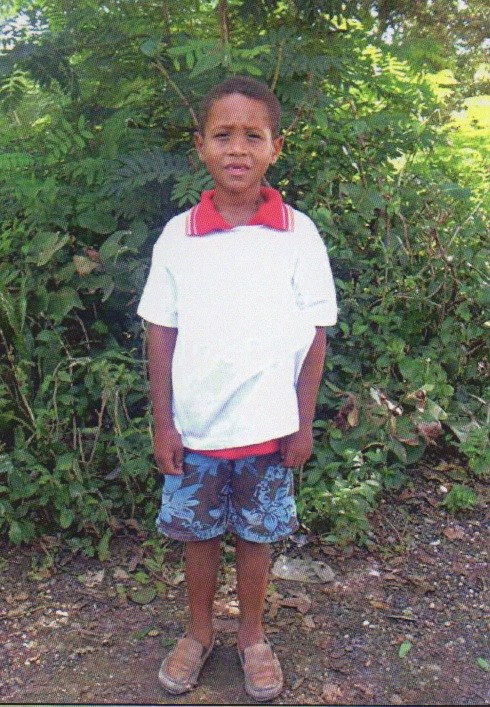
Daniel, 8, of Dominican Republic

Daniel is 8 and lives in the Dominican Republic with his grandmother, who is employed as a laborer. There are four children in the family. The average monthly income in his community is $88/month.

Daniel’s household duties are running errands and making beds. He enjoys rolling a hoop and hide-and-seek. Daniel attends church activities and Vacation Bible School, and his performance is average in primary school. His birthday is June 8.

Image

Constante, 6, of Togo

Constante is 6 years old and lives in Togo with both of her parents, who are sometimes employed. There are two children in the family. The average income in their community is $56/month.

Running errands is Constante’s household duty. She likes playing with dolls and playing group games. Her performance in primary school is average, and she regularly attends church activities and Bible class.

It’s all in the Timing

Image

Samuel, 6, Colombia

Sometimes I’m just going along, living my life, and suddenly God’s Timing jumps up and surprises me!

I don’t know why it’s always a surprise when it happens to me. Maybe it’s because as I get bogged down in the details of the day-to-day, it becomes easy to forget that God is working in my life. His timing is always perfect, and that doesn’t necessarily relate to our imperfect lives and world.

Regardless, it’s always a pleasant surprise when it happens.

One time, it went like this:

It was a typically relentlessly hot August afternoon. I was at home, hanging out with my kids, hiding from the afternoon sun on our couch and watching movies, waiting until the worst heat of the day had passed so we could spend the evening swimming. I heard the mailman drive past outside, and being a Compassion sponsor, I can pick out the sound of the mail truck like a mom who zeroes in on her child’s cries on a crowded playground.

Naturally, I slid on my flip flops and headed outside to check the mailbox in hopes of hearing from one of my sponsored children. The possibility of finding a cream-colored Compassion envelope in the mailbox was definitely a small price to pay for braving the desert heat.

And this time, I was rewarded for my effort! I rushed back into the house, plopped back down on the couch, enjoying the cool AC, and tore into the newest letter.

This one was from Samuel from Colombia. He was 6 years old, so his tutor at his Compassion project or his mother always helped him to write his letters. As I unfolded the letter, I was surprised to find several pages stapled together. Samuel’s letters up to this point rarely filled half a page, so I wondered what was going on.

As I began to read, I realized this was no ordinary letter. It was two full pages written by Samuel’s tutor in July, and she had some bad news to relay.

Samuel’s mother had suffered a stroke and was currently hospitalized. She suffered paralysis on her left side. And Samuel, who was living with his aunt temporarily, at the time wasn’t allowed into the hospital to see his mother for fear of upsetting him too much.

Samuel’s tutor let me know that she was picking up Samuel each day, bringing him to the Compassion project, feeding him lunch and taking him to school and back home. She also let me know that Compassion had been notified and was offering all the support and help possible.

As I took in this bad news and tried to comprehend what this all would mean to Samuel, I continued to read. I ‘d barely gotten through the explanations of his mother’s medical issues, when the letter’s tone turned thankful.

It turned out, within days of Samuel’s mother going to the hospital, the family gift I had sent to them back in May had arrived. It was only $100, but it came at a time when this woman, who already struggled to support her child, was facing a scary health problem, an unknown amount of time in the hospital and likely mounting medical bills.

Samuel’s tutor described how she and the Compassion project director visited Samuel’s mom in the hospital, and that she was able to recognize them. She said they told her about the gift, and that Samuel’s mother “expressed a faint smile of gratitude.”

And I sat there in my living room astonished that such an easy act for me, logging into my account and sending that gift to Samuel two months before, had arrived at just the right time for this family. It was clearly God’s Timing at work.

I couldn’t know in May what this single mom in Colombia would be facing in July, but God knew, and he used that simple act by one of his children in the United States to bless one of his children in Colombia at just the right time.

I’m thankful for that special glimpse of God’s Timing, and humbled that he would bless me by involving me in some small way. It occurs to me that the gift I sent in May not only helped Samuel, but it also helped me.

Receiving news like that, I definitely would have wanted to help out in any way, but what could I really do for Samuel with so many miles separating us? I could have sent a gift right away, but financial gifts generally take two months to arrive. I could send Samuel letters, cards and stickers, wishing him well and letting him know I’m praying for his mother, but again, those would take a couple of months to arrive, so would have no immediate effect.

With God’s Timing, I could rest assured that I had done all I could do, and all that was left was to pray for Samuel and his mother and leave the situation in God’s hands.

“And if anyone gives even a cup of cold water to one of these little ones because he is my disciple, I tell you the truth, he will certainly not lose his reward.” Matthew 10:42

“And if anyone …

Gift-Giving Impacts Families

What can you do with $100? Pay your cable bill? Take your family out for a nice meal? Buy a new outfit?

I’m sure you can think of many ways to spend $100, but what do you have left when that money is gone? Is it anything that made a lasting impact on your life? More important, is it anything that made a lasting impact on someone else’s life?

Take a look at what you can do for someone else with $100.

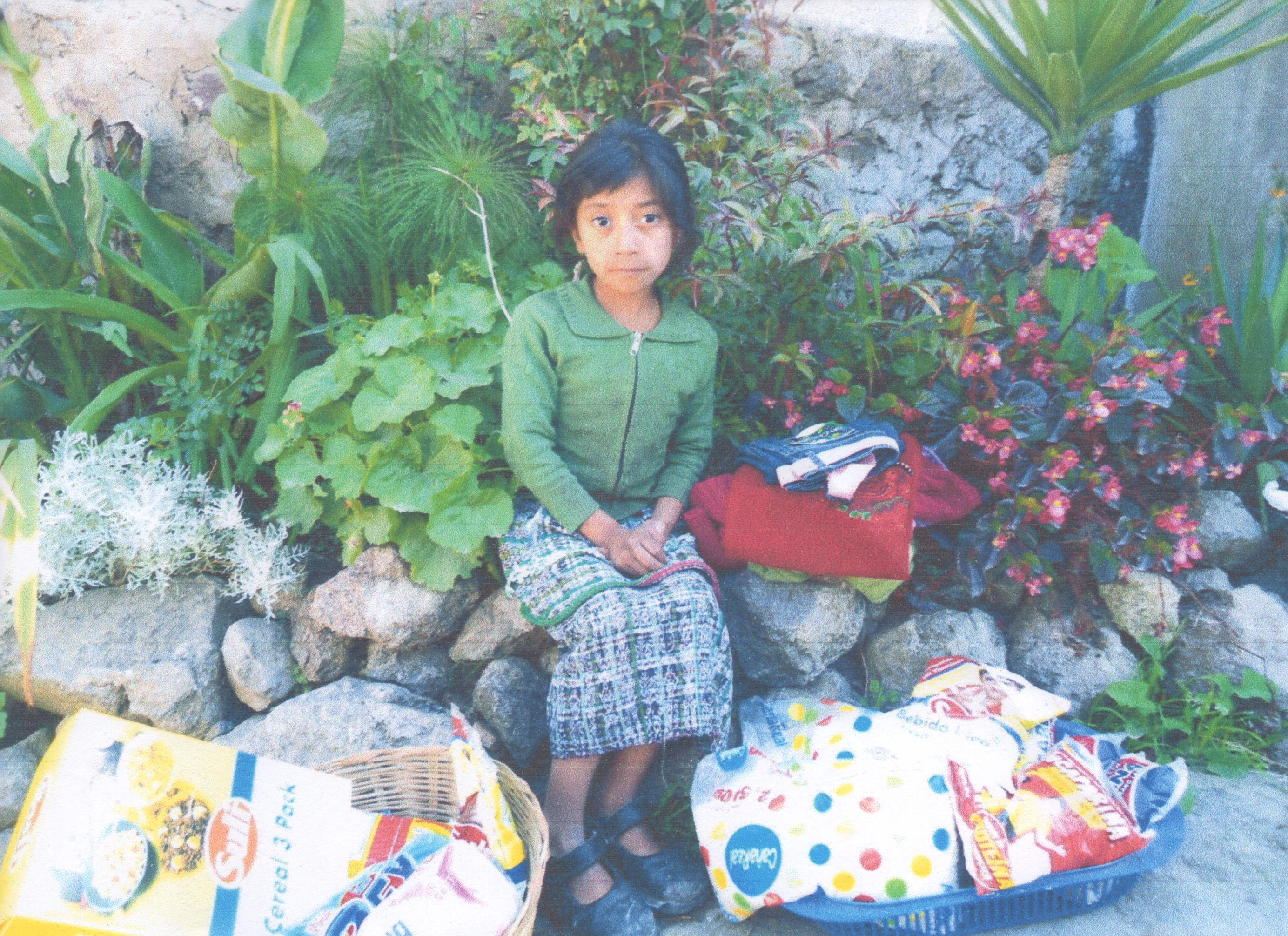
Roxana from Guatemala was able to purchase groceries and clothing.

Esteban from Nicaragua, who lives with three young brothers and their single mom, was able to purchase a stovetop with two burners.

Paula from Colombia purchased food for her family.

Zainabu from Ghana purchased items that her mother could use to make food to sell at the market.

Compassion allows sponsors to bless their children with monetary gifts above and beyond sponsorship. These can be birthday gifts, family gifts or even general gifts. The gifts can range anywhere from $10 to $1,000, and one hundred percent of the gift goes to the child, with no money taken out for administrative costs. Compassion restricts the amount of money you can send to your child in order to avoid creating dependence in the child’s family or jealousy within the community.

When you send a monetary gift to your child, it is changed into the child’s local currency and transferred to the Compassion office in his country. A Compassion representative then meets with the child and his family to decide what items are most needed before going to purchase the items.

It can take up to two months for this process to take place, but when the gift money is spent, the child will write a letter to you detailing the items purchased. Sometimes, depending on the resources available in your child’s center, you will receive a photo of your child with the gift, too.

These gifts can help your child’s family tremendously. The average income in the communities of the children pictured above varies from $42/month (Ghana) to $147/month (Colombia), so giving a monetary gift is a great opportunity to help your sponsored child.

“Every man shall give as he is able, according to the blessing of the Lord your God which he has given you.” Deuteronomy 16:17

Learning Compassion

Image

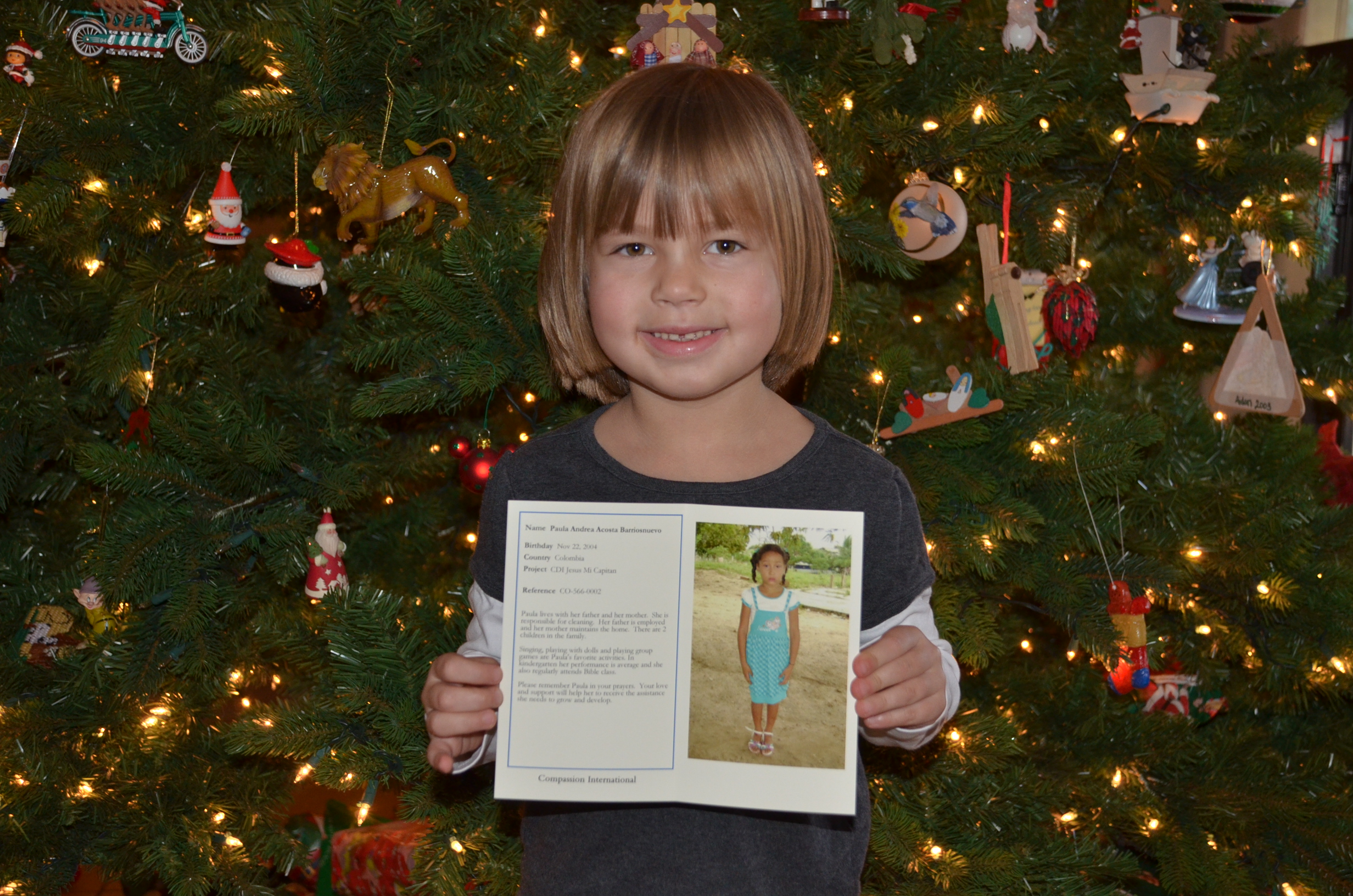
Ryan with photo of Paula.

As the holidays approach each year, I am often dismayed by my children’s greed. Wish lists and letters to Santa fill up pages with wants and more wants.

At our house, the lists look something like this: video games, iPods, LOTS of Barbies, and on and on and on. Somehow even “gift cards” pops up on those lists, just in case the wants aren’t satisfied.

Even Charlie Brown laments the commercialism that often overshadows Christmas in his famous holiday show.

I’ve noticed this consumerism in the kids doesn’t only manifest at Christmas, though, so this year, I wanted to find a way to chip away at the entitlement that seems to be coursing through the veins of “kids these days.”

I know, I know, every generation’s parents think their kids are spoiled and don’t appreciate what they have, and I’m sure a lot of that goes along with being a child. I’m sure everyone from my generation heard the famous “kids are starving in Africa” line at dinner, just as our parents heard about the kids starving in China.

So like any good parent, I told the “when I was your age” stories and the “walking to school in the snow uphill both ways” tales. But words never seem to bring home the point like actions do.

While I wasn’t willing to send my children on uphill marches through the snow to prove my point that they actually have it pretty good, I was ready to find something that would have more meaning in their lives.

In September, while reading one of my favorite blogs, the writer took a trip to Guatemala with other bloggers. The trip was sponsored by Compassion International, a charity whose motto is “releasing children from poverty in Jesus’ name.”

The bloggers spent a few days touring Compassion-run projects around the country and writing about their experiences. I was deeply moved by the stories and photographs that resulted from this trip, so I started researching Compassion. In just a few days, I’d made the decision to sponsor a child.

I couldn’t believe how many children there were on the web site or how specific I could get in my search. I could narrow it down by region, country, age, disability, orphan, HIV/AIDS affected, gender and even birth date.

Finally I chose a 10-year-old boy from Guatemala named Anderson. I showed his photo to my children and explained sponsorship. I wasn’t sure what their interest levels would be, but am happy to report that it went over quite well.

They had all kinds of questions about Anderson: where did he live, what was his house like, what did he eat, what was he like. I read them the brief biography from the web site and told them the only way to find out more was to start writing to him.

Then each of my three oldest boys sat down and wrote a letter to this boy in Guatemala. A boy they’d never met, but had already piqued their interest. My 9-year-old even sent him some baseball cards from his own collection.

We have sponsored a few more children since then, including a 5-year-old girl from Colombia, hand-picked by my own 5-year-old daughter. I was thrilled to witness my daughter’s thoughtfulness when she picked out stickers from her own stash to send to a little girl she has never met.

In three short months, these sponsorships have impacted our family in many small ways. They’ve made us more conscious of how we spend our money and more thankful for our blessings, to put it mildly.

They also have provided many teachable moments, like when my daughter wanted me to make a video of her doing a ballet dance to send to our Colombian girl.

I said, “Honey, she doesn’t have a TV.” That reminded me that what may seem obvious to us adults isn’t always so clear to the kids. Her look was one of disbelief, then horror, as she empathized for a moment with this little girl who lives without a television.

Do I dare tell her this little girl likely lives without a lot more than television? Do I tell her that thanks to our meager contribution, she gets a couple of meals a week, some tutoring, some healthcare and spiritual guidance?

That hardly seems like enough to me, and I’m sure the unfairness of it will be too much for my Kindergartener to grasp. It’s too much for me to grasp.

“She doesn’t have a TV,” I repeated, “so why don’t you draw her a picture of yourself doing ballet instead?”

As she bounced off happily to draw her picture, I thought, there will be plenty of time for her to understand the reality of the situation.

For now, she can do what she can, which is caring about somebody else.

(This story was written by Kerri and posted in December 2010 on another web site, http://www.parentingfortherestofus.com, a blog about parenting with several contributing writers).

Too Small to Ignore

Image

Sometimes when a book relates upsetting stories, and especially when those stories involve children, I have to take frequent breaks from reading. I have to put it down and walk away so that the pain coming from the pages reaches me only a little bit at a time.

Wess Stafford’s book, “Too Small to Ignore,” was definitely one of those books.

It took me quite a while to get through it. It was well written, but the stories of child abuse and children in poverty were very difficult to read.

Stafford was a child of missionaries who spent part of his childhood in Africa. There, he essentially led two lives.

One was the idyllic childhood in the small African village where his parents were working. There he enjoyed learning and growing in a close-knit community, watched over by many loving adults. It was there that he also witnessed poverty firsthand. As a child, he saw many close friends in the village die, giving him his first glimpse of the destructive effects of poverty.

The other life Stafford led was at the unspeakably abusive boarding school he attended each school year with other children of missionaries. Here children were punished, beaten and abused daily in unfathomable circumstances.

Stafford used these situations in his life for good, though, committing his life to helping children in poverty. Today, he is the CEO of Compassion International, an organization that serves children in 26 countries, with a strong commitment to Christ, children, church and integrity.

Despite the difficult obstacles Stafford faced as a child, he has become a champion of children everywhere. He urges readers to rethink the importance of children and their role in our lives, putting them first, treasuring them and pouring our time and love into them, whether they are our own children or children in a faraway village.

As he explains the effects of both financial and spiritual poverty on children, he challenges the reader, “Now that you know, what will you do?”

This book is eye-opening, thought-provoking and inspiring, and I highly recommend it.