An Invisible Thread

InvisibleThread

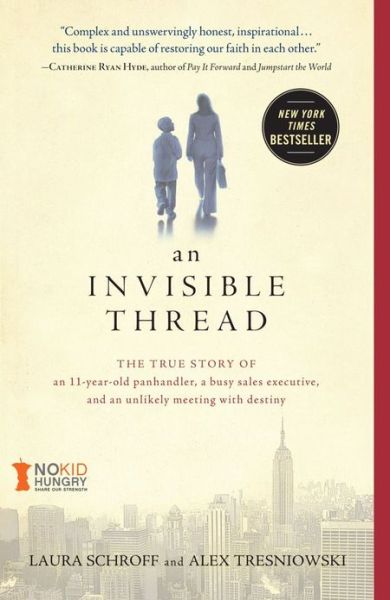
“An Invisible Thread” by Laura Schroff and Alex Tresniowski

Laura was a successful advertising executive in New York City when she passed 11-year-old Maurice on the streets one day. She hardly noticed him at first.

“His words were part of the clatter, like a car horn or someone yelling for a cab,” she wrote. “They were, you could say, just noise – the kind of nuisance New Yorkers learn to tune out.”

But something stopped Laura in her tracks, and she walked back to Maurice, invited him to McDonald’s, and began a relationship that would change both of their lives. The two began to meet weekly, and before long, Laura even included Maurice in her own family’s holiday celebrations.

“An Invisible Thread,” by Laura Schroff and Alex Tresniowski, tells a fascinating and moving story of two people from vastly different worlds.

Their worlds were so different that when Maurice found out Laura had tracked him down to the public housing apartment he shared with many relatives, he begged her never to return there for her own safety.

“You have to promise me you’ll never go back there again,” he said. The child was trying to protect his adult mentor.

But Laura and Maurice had in common the pain of childhoods marked by chaos. Laura grew up navigating her own father’s violent alcoholic outbursts, which seemed to give her a special understanding and empathy for Maurice.

Laura tried to create a comforting routine for Maurice with weekly dinners, laundry washing, and even making him lunch for school daily. It was the kind of routine that those who have lived without really can appreciate.

Maurice requested that his lunch be give to him in a paper bag each day. He said, “Because when I see kids come to school with their lunch in a paper bag, that means someone cares about them.”

Despite warnings from friends and loved ones that she was possibly becoming too close to this child, Laura forged ahead, enjoying a relationship that has continued into Maurice’s adulthood. It is a friendship that has survived ups and downs in both their lives.

Laura’s decision in that brief moment so many years before changed two lives for the better. This is an uplifting story of love and trust.

Art Spotlight: Bolivia

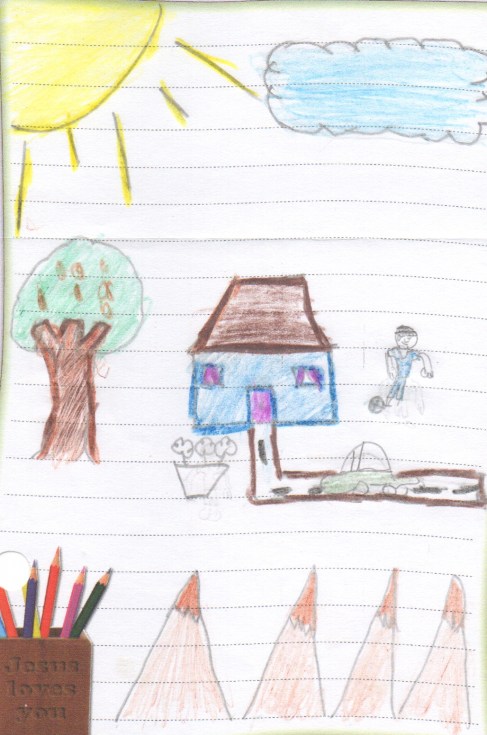
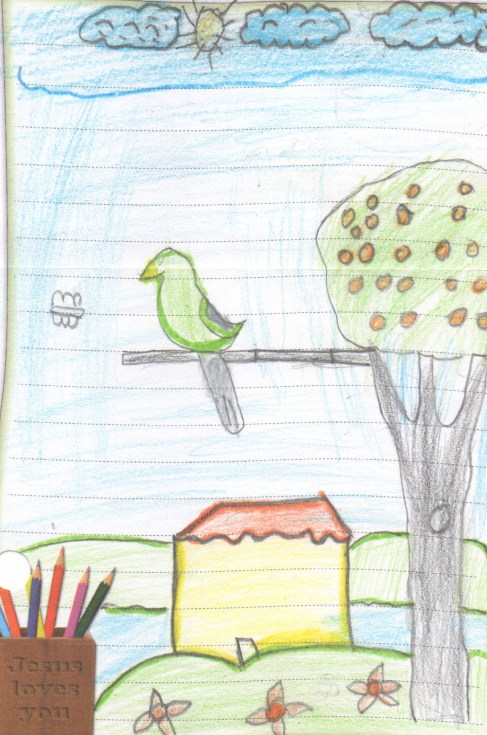
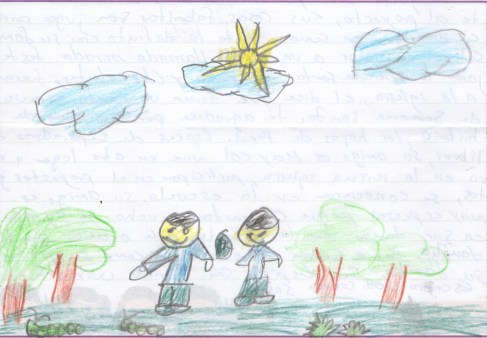
As part of my “Art Spotlight” series, today I am sharing drawings from 9-year-old Humberto in Bolivia. He always colors his drawings very neatly, and it’s clear he spends a lot of time on them.

Image

Image

Image

Image

Image

If you are interested in sponsoring a child from Bolivia, or from any of the 26 countries Compassion serves, please click here.

Christmas Comes Early

It’s time to send out Christmas packages to your sponsor children!

It normally takes about two months for items to reach your Compassion children, so I try to send my Christmas packages out by early October each year.

This year, my children and I put together packets for our sponsor children including items like stickers, bookmarks, coloring posters, thin paperback books and Christmas cards.

Image

Foldable cards from Memory Cross and Noah’s Ark stickers.


Image

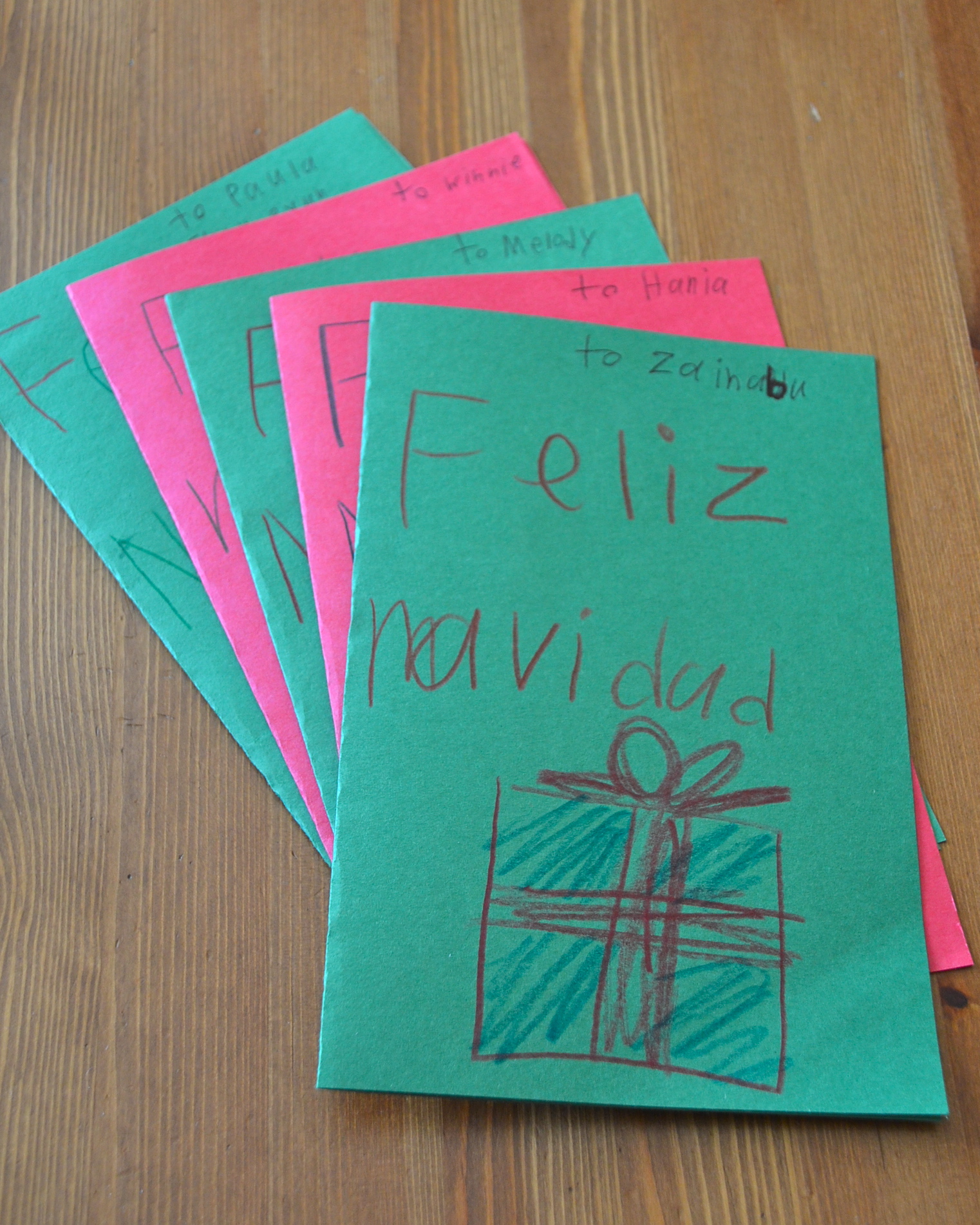
Christmas cards made by my daughter.

Once we had everything together, we started the assembly line.

Image

My sons assembling the Christmas packets.

We put all the smallest items into a Christmas-patterned paper bag, which we stored in a paper folder with pockets along with any larger items. We also labeled any larger items and the paper folders with each child’s name and identification number, and my name and sponsor number.

We ordered some of the items online from Memory Cross, ChristianBook.com and Oriental Trading.

Remember, Compassion has some size restrictions on packages. Items must not exceed 8 1/2 by 11 inches and be 1/4-inch thick or less. Please check out this link for other restrictions.


Compassion’s Blog Month: Week Four

Last Monday was Compassion’s last week of Blog Month, with a goal of seeing 3,160 children sponsored.

Week Four’s assignment was to choose one of two quotes and write about it. You can check out what bloggers wrote by clicking on their links below.

Image

Bev’s Post: The presence of dignity doesn’t mean poverty is absent

Katie’s Post: Dignity

Amanda’s Post: The presence of dignity doesn’t mean poverty is absent. My thoughts…

Brandilyn’s Post: Poverty: Why Can’t We Just Fix-it?

Breanne’s Post: Solve versus Serve

And if you’re ready so sponsor a child, please click here. There are 3,202 children waiting to be sponsored right now.

Don’t Fix Poverty, Just Help a Child

Do you feel like poverty is an issue that’s too big to fix? Are you overwhelmed by the number of people living in poverty in this world?

More than 1.2 billion people in the developing world live below the poverty line, according to The World Bank. That means they live on less than US $1.25/day.

Feeling helpless in the face of such a large number is understandable, but don’t let that prevent you from sponsoring a child.

For only $38/month, you can change the life of a child. Your sponsorship money will provide that child with nutritious snacks and meals, educational opportunities, health and hygiene training, medical checkups, the support of a local church staffed by caring adults, and the message of God’s love through Jesus Christ.

By becoming a sponsor, you also have the unique opportunity to mentor a child through letters, filling him with love, hope and encouragement.

Johnny Carr, author of “Orphan Justice,” says, “Poverty is not necessarily an issue to solve; it is an opportunity to serve. As we go through each day, our heart’s cry should be, Lord, where would you have me give, serve and invest myself to bring hope to the poor?”

Are you investing yourself or are you giving up in defeat?

In Matthew 26:11, Jesus says, “The poor you will always have with you, but you will not always have me.”

It’s true the poor will always be here, and it’s true that you can’t “fix” poverty, but you can make a difference in a child’s life.

You can make a difference in Cristian’s life by clicking here. Cristian is 6 and lives with his parents and one sibling in Colombia. He has been waiting 241 days for a sponsor.

Image

Cristian, 6, of Colombia

You can make a difference in Maria’s life by clicking here. Maria is 9 years old and lives with her parents and five siblings in the Dominican Republic. She has been waiting 213 days for a sponsor.

Image

Maria, 9, of the Dominican Republic

There are 3,249 children on Compassion’s web site today who are waiting for sponsors. You can view them by clicking here. Please consider helping one of these children.

Letter Writing

Have you written to your sponsor child recently? They love to receive your letters and gain lots of encouragement from them.

Compassion’s Blog Month: Week Three

It’s week three of Compassion’s Blog Month, and we’re halfway to the goal of 3,160 children being sponsored. 

So far, 1,747 children have been sponsored this month!

This week’s assignment involved choosing a photo and writing about it. You can see several writer’s posts by clicking on their links below.

Image

Beverly’s Post: Every Picture Tells A Story

Emily’s Post: The Light

Hannah’s Post: Play

Amanda’s Post: Every photo has a story…

If you are a blogger and would like to participate, just click on the photo.

And if you are ready to change a child’s life, and yours, click here to choose a child to sponsor. There are 4,761 children waiting for sponsors on Compassion’s U.S. web site today. Take a look!


A Bible and its Journey

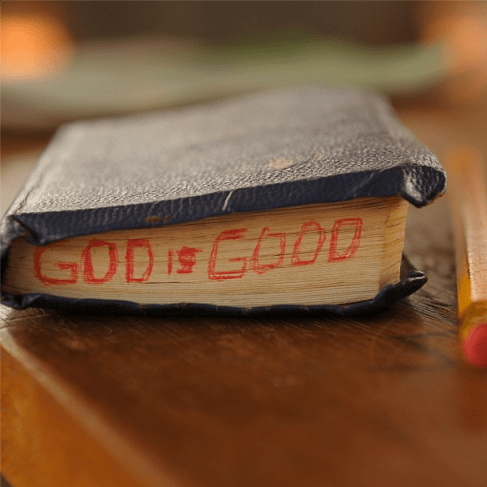
Image

Image courtesy of Compassion.

I am the Bible.

I am also known as the Holy Bible, the Holy Scriptures, the Good Book, the Book of Books, the Word of God.

I live in Bolivia with Jose, and we’ve been together for quite a while.

Jose first grasped me in his tiny hands at the Compassion project, where he went weekdays after school. He watched with great interest as his teacher placed a cardboard box on a table. She used scissors to cut the tape securing the box, then began to pull out a stack of beautiful new books with black leather covers, setting them on the table next to the box one by one.

Next, Jose’s teacher called the children in his class up to the table one at a time, and finally it was his turn. She picked me up, Jose reverently pulled me close to his chest, and I’ve been his ever since.

I remember that first trip home from the project. Jose’s teen brother was waiting outside, leaning against a brick wall across a dirt road, when Jose came out of the building with his classmates. Seeing his brother, Jose sped up, carrying me under one arm. He held me up high with two hands when he got to his brother, showing off his new prize proudly.

His brother, hands in his pockets, gave a grudging acknowledgement, in the sullen way of teens, and hurried Jose home.

It was a long walk. Jose’s tiny palms were sweating all over my shiny new cover before long, as he half-ran to keep up with his brother’s long legs. Upon arriving home, I was placed under Jose’s pillow, while his older sister prepared beans and rice for dinner.

Jose’s parents arrived much later, on their shoes and pants and hands dust from the field where they had worked sunup to sundown. They clearly were too tired to read Jose’s new book that night.

Even when Jose couldn’t read, he often took me out from under his pillow and carefully flipped through my pages before returning me to my special place. Those days were fine, but when Jose learned to read, the pace picked up a bit.

Soon my pages were pored over slowly, carefully. I was brought to the project, and carried home again, over and over. Jose stored letters from his sponsor just inside my back cover, often finding verses in the letters, then underlining those verses on my pages. It was good to be used so often.

I recall the day Jose scratched out the words “GOD IS GOOD” in red ink on my pages’ edges. He was 13 years old and had spent the day at the project, praying and worshipping with his friends. He had felt down lately because there was trouble at home. His mother was having a very difficult time providing for the family. His dad had left the country years earlier to find work, and although Jose begged God for his return every day, Jose’s prayers went unanswered. It was like his father had disappeared forever.

But that evening, after the long walk home from the project, he was surprised to see a man sitting in front of his small home. It was his father! He couldn’t believe his eyes. After a joyful reunion, Jose went to bed feeling all was right in his world. He found a pen and inscribed me just before rolling over and falling asleep.

That was the last day of calm for Jose in a long while, though. After such a long absence, it was hard for his family to adjust to his father’s presence again. Soon there was fighting, yelling, hitting. Jose’s trips to the project became less frequent. Sometimes there would be four or five letters from his sponsor waiting for him by the time he finally attended the project again. And he rarely opened me to read.

Those were dark times for Jose. His father didn’t stay long, and when he left, Jose made the decision to leave school and join his mother and siblings in the fields. And I was tossed under the bed, dusty and forgotten.

Three years later, a hand pulled me from the dark and dirty space. It was Jose! He seemed tired, and clearly the years in the field had aged him more than I had expected.

The young man slowly flipped through my pages. He pulled out the stack of sponsor letters, and spent the evening reading through each one. Then he even spent some time reading my pages, falling asleep with me open at his side.

The next morning, I was tucked under Jose’s arm, making the familiar trip to the project once again. Jose still worked in the fields, but he worked less days, and spent some days at the project, and some nights at school.

It was an exciting time because I no longer was forgotten. Each night, my pages were turned, marked, read and read again.

And here I sit, years later, on a battered wooden table in Jose’s old project. Worn, tattered, but still showing my proud inscription, “GOD IS GOOD.” And of course, He is good!

In minutes, Jose will return, tuck me under his arm, and head into the project’s chapel, where he will deliver a message to his congregation. Parents and children from the community, just like him, now attending Jose’s old project, will listen to this message, be inspired by his message.

And they will have hope because the man who is preaching to them, the man who runs the project where their children attend, is a testament to what Compassion can do for their children. He is their pastor.

*All characters in this post are fictional, as this is written in response to a writing prompt provided by Compassion’s Bloggers. Please consider helping Compassion reach its goal of 3,160 children sponsored this month. We’re halfway there! You can sponsor a child by clicking here.
 

Art Spotlight: Guatemala

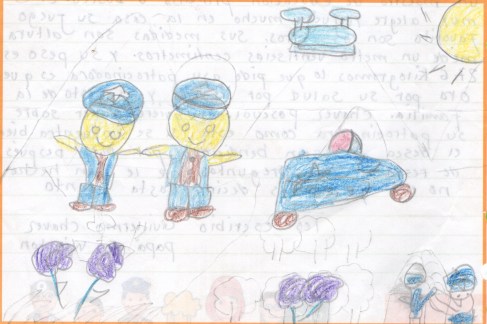
I’ve sponsored Winston, 11, from Guatemala, for 3 years now, and he has sent me some great drawings over the years:

Image

Image

Image

Image

Image

Compassion’s Blog Month: Week Two

This is week two of Compassion’s Blog Month, where the goal is to finish the month with 3,160 children sponsored.

Each week, Compassion assigns a writing prompt to its bloggers, and this week’s assignment was “three things about one word.” You can check out each talented writer’s take on the assignments by clicking on the links below.

ImageTeresa’s Post: Three Things About One Word

Hanna’s Post: Apathy

Katie’s Post: Hope

Breanne’s Post: Remember: One word, Three thoughts (plus a bonus)

Beverly’s Post: Fear

Kayla’s Post: One Word: Color

Amanda’s Post: Choose one word?

Alicia’s Post: Why are We Silent?

If you are a blogger and would like to participate, just click on the photo.

And if you are ready to change a child’s life, and yours, click here to sponsor a child.

Hope

Hope is a powerful gift, and it is a gift you can give by sponsoring a child.

Without hope, a child growing up in poverty faces many challenges. Staying in school is unlikely as day-to-day survival takes priority. Nutritious meals and medical care are rare, and even the ability to dream of a better future may become difficult.

When you sponsor a child through Compassion, that child receives medical and dental check-ups, spiritual and educational training, meals, and best of all, hope.

If you’re wondering how hope can be lumped in with those other life essentials, take a look at recent research, which shows that sponsored children fare much better in life than their non-sponsored peers.

A study published in the April issue of Journal of Political Economy and led by Dr. Bruce Wydick, a professor of economics and international studies at the University of San Francisco, shows stark differences between sponsored and non-sponsored children. 

Former Compassion-sponsored children were found to stay in school 1 to 1.5 years longer than their non-sponsored peers. In Uganda, that average was even longer at 2.4 years. 

They were 13.3 percent more likely to finish primary school, 27 to 40 percent more likely to finish secondary school, and 50 to 80 percent more likely to complete a university education than non-sponsored children. 

Those are just the study’s findings regarding education. Employment and leadership also were affected greatly by sponsorship. 

As adults, former Compassion-sponsored children were 14 to 18 percent more likely to have salaried employment and 35 percent more likely to work a white-collar job than their non-sponsored peers. They also were found more likely to become community leaders, church leaders and teachers. 

This is all statistical proof that the hope child sponsorship provides is changing lives. But how about some personal proof? I receive letters from my precious sponsored children sharing goals for their future, career aspirations, and sometimes, just simple requests of prayer to pass to the next grade in school. 

Here are just a few examples: 

“I want to go to university to graduate as a telecommunications engineer.” – recent secondary school graduate Favian, 19, Guatemala

“I want to finish elementary and high school and become a professional.” – Luis, 7 Colombia 

“When I grow up, I would like to be a cop.” – Winston, 11, Guatemala

“My dream for the future is to be a doctor.” – Esteban, 7, Nicaragua

“I would like to become a lawyer.” – Wagner, 16, Guatemala 

Imagine how these children’s lives have been changed by sponsorship that they are dreaming of careers. 

Please consider giving hope to a child in need. You can sponsor a child today by clicking here.
 

Compassion’s Blog Month

September is Compassion’s Blog Month, and it’s a good chance to read well-written posts by people who have a passion for children in poverty.

Each week, Compassion will assign a writing prompt to its bloggers, with the goal of finding sponsors for 3,160 children. If you are a blogger and would like to participate, just click on the photo.

ImageAnd if you just want to read what others are writing, please visit the following links:

Katie’s Post: A Conversation With My Childhood Self

Alicia’s Post: To My Child Self

Hannah’s Post: Talking to My Childhood Self

Breanne’s Post: Breathe.Pray.Try.

Kimberly’s Post: Time Warp…

Brandilyn’s Post: Mi Patitos, Mi Patitos

Amanda’s Post: Letter to my smaller self

Teresa’s Post: A letter to my younger self

Beverly’s Post: Letter to Childhood Bev

Miranda’s Post: Dear Me

Be sure to check back throughout the week, as I will continue to add more links to this post. You can read my first post for Blog Month, titled “A Letter to Myself,” on my home page.

A Letter to Myself

In 1983, most of my Sundays started out the same. I woke up, got dressed, grabbed myself a bowl of cereal, then hopped on my bicycle and pedaled off to the neighborhood church.

My best friend Diana introduced me to this church. She had moved to a new neighborhood recently and was attending a new school. I missed her terribly. But one day, I spent the night at Diana’s new house, and the next morning, a shiny silver bus pulled up and carried us to church. It was a church only blocks from my own house, and after that day, I was hooked.

The Sunday School teachers were so kind, and I really enjoyed learning and singing all of the songs. I got to see my best friend every week, too.

But my favorite thing of all was earning stickers for memorizing Bible verses. Some mornings I would memorize up to four or five verses before heading home happily with my new stickers.

When I found out I could earn my own Bible by attending church for 12 weeks in a row, I committed to that goal. I was so proud the day my name was called to go up in front of the gathered Sunday School classes and receive my brand-new blue Bible.

But one day, the unintended actions of a few pierced my happiness, and doubt began to trickle into my heart.

I had just arrived at church, and like I did every Sunday, I was chaining my bicycle to a bench outside because there were no bike racks. While I was bent over clicking the lock, I sensed someone watching me. As I turned my head, from the corner of my eye I could see a couple of adults in a small group, and they were looking at me and chuckling.

My fair, freckled face turned red and hot instantly. I may have been only 10 years old, but I knew when someone was having a laugh at my expense.

And that was the beginning of a year-long battle in my head. I continued to go to church most Sundays, but the joy I had once felt in being there was being eaten away by doubt and embarrassment.

I was different from most of the children going to church every week, and I knew it. But before the bike-chaining day, I had been able to ignore it. Now it was all I could think about, and the differences began to loom before me, stacking up like bricks in a wall that eventually would block me from going to church at all.

Most children did not ride their bicycles to church. They came in a car, and not only that, they came with their parents. I saw them holding hands with their parents as they walked to the Sunday School room each week. And I saw them leaving with their parents after church, happily detailing what they had learned in class or deciding where to go for lunch.

Their parents brought them to church each week, while mine were still in bed, sleeping off the previous night’s drinks.

And most children came to church dressed appropriately, while I was dressed in the only clothes I had. Jeans with holes and old t-shirts and ratty tennis shoes made up my wardrobe.

As the weeks went by, I began to make excuses to myself not to go to church anymore. And because no one at home cared if I went, it was easy enough to just stop. It was about two decades before I returned.

Knowing what I know now, there are a few things I would tell my 10-year-old self if I could. If I could write my 10-year-old self a letter, just like the encouraging letters I send to my sponsor children each month, I would pour love and praise into that unworthy little girl, and build her up so she wouldn’t even consider leaving church.

Dear “Younger” Kerri,

How are you? I pray that you are healthy and happy, and that God is blessing you every day.

I am so happy to receive your recent letter, but something in it worried me. You said you might not continue going to Sunday School because you feel so different from the other children there.

I want to tell you, I know how hard it is to feel different. Sometimes it can be so embarrassing and painful that you just want to disappear, right? I remember feeling that way. 

Did you know that your Heavenly Father loves you no matter how different you are? In fact, he loves you just as much as he loves the girls in their pretty Sunday dresses, and the boys whose mothers kiss them on the cheek at the Sunday School door. Those things don’t matter to him. He loves you.

Job 34:19 says, “Who shows no partiality to princes and does not favor the rich over the poor, for they are all the work of his hands?”

You will be a teen soon, and it is so important for you to continue your relationship with God. It is so important for you to have fellowship at church, where people can encourage you and teach you.

You are about to enter some difficult years, Kerri. I know those adults who laughed at you made you feel small and embarrassed you, but I am sure they meant no harm. They probably were impressed and surprised to see a child like you taking on the responsibility of getting yourself to church. Please don’t think badly of them or let that day ruin the many years ahead when you will benefit from a close and personal relationship with your Heavenly Father.

Please persevere, continue going to church every week, and pray that God will ease your feelings of discomfort and unworthiness. He will be there with you. And please write to me, and tell me what you are learning each week.

You are a special and unique young lady, and I send you lots of love.

I leave you with this verse:

“For I know the plans I have for you, declares the Lord, plans for welfare and not for evil, to give you a future and a hope.” – Jeremiah 29:11

Love,

“Older” Kerri

Won’t you sponsor a child today and share the encouragement and love that is unique to your personal experiences? There is a child out there who will benefit greatly from your words.

Click here to sponsor:  http://www.compassion.com/sponsor_a_child/default.htm?referer=129652

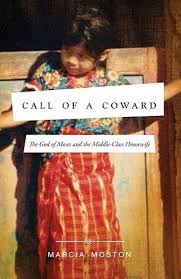
Call of a Coward

Image

This adventure begins when a New Jersey mother finds herself driving through Mexico with her husband and daughter, leaving behind her middle-class life to live in a Mayan village in Guatemala.

And that is just the beginning for Marcia Moston, author of “Call of a Coward.” At only 142 pages, this book is a quick read, but it’s packed with action throughout, and it paints a vivid picture of life as a missionary in Guatemala.

Moston shares her fears and reservations about the move, spurred on by her husband, who had recently returned from a mission trip. She shares the difficulties encountered in their journey, and also the deep relationships forged with people she met along the way.

As if driving through the entire country of Mexico weren’t enough to test anyone’s faith, this mother must learn how to survive and care for her family in a world very different from her own.

After her first trip up the mountain to the village, on a road without guardrails that barely accommodates two vehicles, she swears she will never take the road again, and that is only one challenge she must overcome.

Without the help of a grocery store or refrigerator, Moston must learn to feed her family. She accompanies a fellow missionary to the village butcher, who kills a cow every Saturday and hangs it from the rafters. As customers choose the piece they want, the butcher chops it off for them. The author laments this is a far cry from the styrofoam packages to which she is accustomed.

Throughout the book, the author worries she is unworthy and incapable to answer God’s call in her life, and she often questions whether He has picked the right person. When her journey takes her from the Mayan village to a small church in Vermont, she is left wondering whether her time in Guatemala was useful.

But as often happens, it all makes sense in the end, and her faithfulness is rewarded.

When One Door Closes

Last week, I received the phone call that no sponsor wants to receive. It was Compassion calling to tell me that my sweet Roxana from Guatemala has left the program.

This is the same child about whom I posted earlier on this blog after receiving a particularly sweet letter from her. She wrote that she dreams about playing ball with me, and she hopes to see me someday. She also let me know that she keeps the photos I’ve sent to her in a frame next to her bed.

Image

Roxana, 9, Guatemala

I’ve sponsored her since April 2011, when she had just turned 7.

The Compassion representative who called me said Roxana’s parents pulled her out of the program.

There could be any number of reasons for a parent to take their child out of Compassion. Moving to another area or some other change in the family’s situation could be the reason, though it’s best not to speculate because then my imagination will go wild and only cause me to worry. Instead, I must respect the parents’ choice and trust in God’s plan.

Of course, that’s not exactly easy to do.

Fortunately, my 8-year-old daughter Ryan was able to push things along. She, too, was sad to lose Roxana, but she was ready to start scouring the Compassion web site that same day to sponsor a new little girl.

I set Ryan up at the computer, and searched for girls in Guatemala around the same age as Roxana, and my daughter quickly narrowed it down to one little girl. I told her I wanted to think about it, but the next day, she was back to campaigning for her chosen girl.

She was fairly relentless. Ryan enjoys writing, drawing pictures and making cards for the girls we sponsor, and she wasn’t going to let me mope about Roxana much longer. And she did pick a very cute little girl, so I sponsored my daughter’s choice, Hania, 7, of Guatemala.

I emailed Compassion later that day to request an emailed digital copy of Hania’s photo on file, and found out I am her first sponsor. I also found out this little cutie had been waiting for a sponsor since she registered with Compassion back in September of 2012.

Image

Hania, 7, Guatemala

How can it be that almost a year has passed that no one decided to sponsor this little girl?

I immediately sent her an email with photos using Compassion’s online letter-writing tool, and my daughter got to work making cards and drawings for her new friend.

Later that night, Ryan came downstairs at bedtime to show me the photo of Roxana she keeps on her dresser. She leaned in my ear and whispered, “I prayed for Roxana.”

The door may have closed on that special relationship with Roxana, but I am comforted knowing that I’m not alone in continuing to pray for her.

And now we open the door to our newest sponsorship. Welcome to our family, Hania.